
Understanding NDAA Section 889 and Hikvision
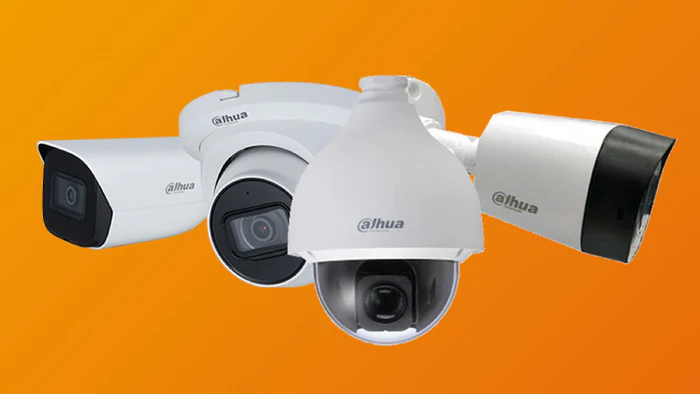
The National Defense Authorization Act (NDAA) Section 889, passed in August 2018 and effective August 2019, explicitly prohibits federal agencies and contractors from purchasing, using, or maintaining Hikvision surveillance equipment due to national security concerns. The legislation specifically names Hangzhou Hikvision Digital Technology Company alongside Dahua Technology, Huawei Technologies, ZTE Corporation, and Hytera Communications as manufacturers whose products pose unacceptable security risks.
The prohibition covers all Hikvision-branded cameras, network video recorders, and video management systems, regardless of manufacturing location or purchase date. Organizations subject to federal contracting requirements cannot use Hikvision equipment anywhere in their operations—even for monitoring areas completely unrelated to government work.
Beyond the NDAA ban, the Federal Communications Commission implemented the Secure Equipment Act in November 2021, which restricts new Hikvision equipment from receiving FCC authorization for import and sale in the United States. This restriction makes obtaining new Hikvision products and replacement parts increasingly difficult, even for private businesses not subject to federal contracting requirements.
Federal Agencies and Installations: Complete prohibition on Hikvision equipment at all federal facilities and operations.
Federal Contractors: Businesses holding or seeking government contracts cannot use Hikvision equipment anywhere in their operations, regardless of whether specific areas relate to government work. This broad restriction affects thousands of companies across diverse industries.
Grant Recipients: Organizations receiving federal grants cannot use grant funds to purchase Hikvision equipment. While technically permitted to use non-federal funds for separate systems, this creates compliance complexity most organizations prefer to avoid.
Critical Infrastructure: Facilities designated as critical infrastructure under federal definitions must remove existing Hikvision systems and replace them with NDAA-compliant alternatives.
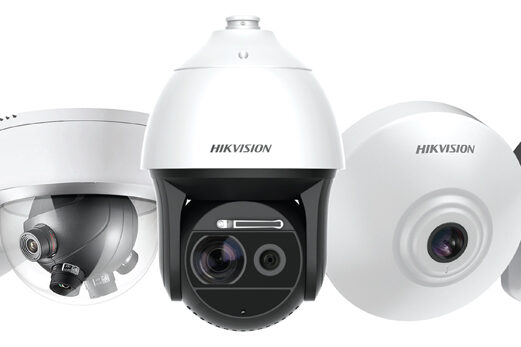
Our Brands
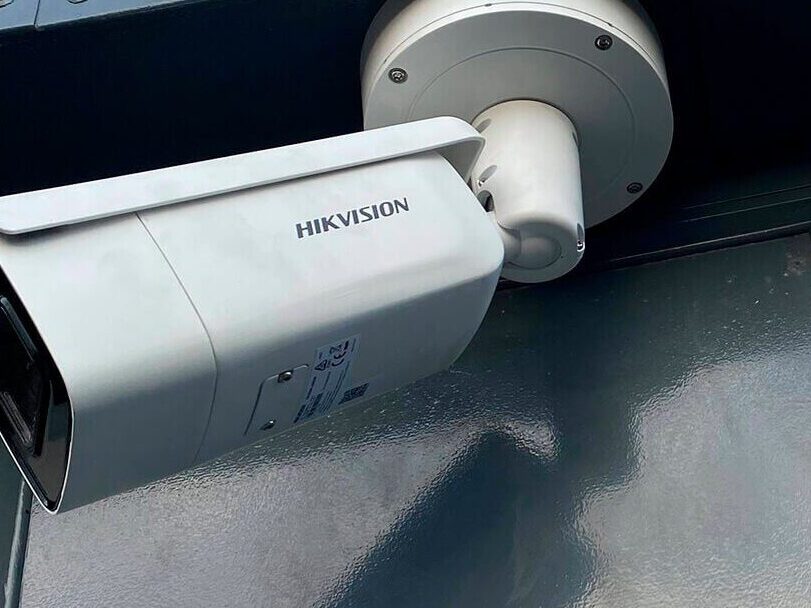
Hikvision Technology Overview
Despite regulatory restrictions for certain applications, understanding Hikvision’s technology helps contextualize their market position and evaluate alternatives.
Hikvision’s ColorVu technology represents significant advancement in low-light surveillance, capturing full-color video 24/7 rather than switching to black-and-white infrared imaging at night.
HikAI-ISP Processing: ColorVu 3.0 integrates advanced AI image processing through Hikvision’s HikAI-ISP chip. This AI-powered image signal processor provides enhanced noise reduction while preserving image detail, dynamic motion trail reduction that minimizes blur from moving objects in low light, and improved static brightness for clearer nighttime images.
3D LUT Color Correction: The 3D Look-Up Table technology provides accurate color correction and matching, restoring true colors even in challenging lighting conditions. This ensures critical details like clothing colors, vehicle colors, and other identifying characteristics remain visible and accurate.
AI Wide Dynamic Range: ColorVu 3.0’s AI WDR automatically balances extreme lighting conditions, preventing bright area overexposure while preserving details in dark zones. The system intelligently determines whether to enable WDR based on environmental brightness without requiring manual adjustments.
Hardware Specifications: ColorVu cameras feature F1.0 super-large aperture lenses that capture maximum available light, advanced sensors with sensitivity as low as 0.0001 lux, and smart hybrid light combining infrared and white light with adjustable modes.
AcuSense technology uses deep learning algorithms to distinguish humans and vehicles from other moving objects, dramatically reducing false alarms caused by animals, wind-blown debris, or environmental factors.
AcuSearch Functionality: One-click image-based searching enables security teams to quickly locate specific persons or vehicles across recorded footage by searching for attributes like clothing color, gender, vehicle type, or other characteristics. This significantly accelerates investigations and response times.
Motion Detection 3.0: Enhanced algorithms tailored for diverse application scenarios improve accuracy while reducing false positives. The system effectively filters non-threatening movements like lights hitting stationary vehicles or environmental changes.
Perimeter Protection: Advanced boundary protection algorithms detect intrusions across defined zones with high precision, triggering alerts and active deterrents when configured.
Audio 2.0 Enhancements
Recent Hikvision cameras incorporate Audio 2.0 technology featuring arrayed dual-microphone designs for excellent noise reduction and enhanced vocal clarity, Smart PA (Public Address) speakers extending sound coverage for effective audible warnings, and improved two-way audio communication for remote interaction.
Smart Hybrid Light technology combines infrared illumination and white light with three distinct modes: infrared-only for covert monitoring, white light for full-color imaging with visible deterrent effect, and smart switching that automatically selects optimal illumination based on conditions.
San Jose Security Landscape and Installation Considerations
California maintains comprehensive privacy protections affecting surveillance implementation regardless of camera brand.
California Privacy and Surveillance Laws
California maintains comprehensive privacy protections affecting surveillance implementation regardless of camera brand.
Penal Code Section 647(j)(3) prohibits invading privacy by using cameras where individuals have reasonable privacy expectations—bathrooms, changing rooms, private offices, and similar spaces require careful consideration during system design.
Penal Code Section 632 forbids recording confidential communications without all-party consent. Many businesses disable audio recording or implement clear consent procedures before enabling audio surveillance features.
Labor Code Section 435 restricts employee surveillance in areas designated for rest or comfort, such as break rooms.
The city’s CONNECT SAN JOSE program allows voluntary registration of surveillance cameras with the San Jose Police Department. While registration enables cooperation with law enforcement investigations, it doesn’t mandate specific camera brands or technologies. Participants maintain full discretion over footage sharing and privacy controls.
San Jose experiences approximately one crime every 11 minutes based on recent data. Property crime, particularly motor vehicle theft, represents significant business concerns despite overall declining crime trends. Professional surveillance systems deliver measurable deterrent effects and investigative value for San Jose businesses across retail, commercial, industrial, and office sectors.